'%3e%3cpath%20d='M29.3373%2096.1258C16.4488%2096.1258%206.86376%2083.4535%206.86376%2067.6711V67.0051H47.5157V65.3385C47.5157%2050.7767%2039.2539%2041.1089%2027.5751%2041.1089C13.8054%2041.1089%203.11816%2054.7818%203.11816%2070.6757C3.11816%2084.457%2011.1589%2099.5734%2027.4645%2099.5734C40.1321%2099.5734%2047.7338%2090.3487%2051.2583%2078.7884H49.6066C44.8693%2090.3487%2038.0382%2096.1288%2029.3373%2096.1288V96.1258ZM27.133%2044.5535C37.0466%2044.5535%2042.7755%2052.2232%2042.7755%2063.672H7.41335C8.9546%2053.0007%2016.6668%2044.5535%2027.133%2044.5535Z'%20fill='black'/%3e%3cpath%20d='M60.0131%209.42966H55.6074V98.3498H60.0131V9.42966Z'%20fill='black'/%3e%3cpath%20d='M77.7944%209.42966H73.3887V98.3498H77.7944V9.42966Z'%20fill='black'/%3e%3cpath%20d='M111.394%2096.1258C98.5054%2096.1258%2088.9204%2083.4535%2088.9204%2067.6711V67.0051H129.572V65.3385C129.572%2050.7767%20121.311%2041.1089%20109.632%2041.1089C95.862%2041.1089%2085.1748%2054.7818%2085.1748%2070.6757C85.1748%2084.457%2093.2156%2099.5734%20109.521%2099.5734C122.189%2099.5734%20129.79%2090.3487%20133.315%2078.7884H131.663C126.926%2090.3487%20120.095%2096.1288%20111.394%2096.1288V96.1258ZM109.19%2044.5535C119.103%2044.5535%20124.832%2052.2232%20124.832%2063.672H89.47C91.0112%2053.0007%2098.7235%2044.5535%20109.19%2044.5535Z'%20fill='black'/%3e%3cpath%20d='M176.004%2042.7725H172.811L157.939%2066.4475L142.076%2042.7725H136.126L154.522%2070.3381L135.684%2098.3468H138.769L156.284%2072.8937L173.692%2098.3468H179.639L159.591%2069.0061L176.004%2042.7725Z'%20fill='black'/%3e%3cpath%20d='M208.831%2069.0061L225.247%2042.7725H222.051L207.179%2066.4475L191.315%2042.7725H185.368L203.765%2070.3381L184.926%2098.3468H188.012L205.527%2072.8937L222.932%2098.3468H228.882L208.831%2069.0061Z'%20fill='black'/%3e%3c/g%3e%3cdefs%3e%3cclipPath%20id='clip0_35_103'%3e%3crect%20width='232'%20height='109'%20fill='white'/%3e%3c/clipPath%3e%3c/defs%3e%3c/svg%3e)
Money rules the world, yet women are still not in charge of it.


The 9 Financial Gaps in a Woman’s Life
Pocket money
What is the gender pocket money gap?
Gender pay inequality begins in childhood. Girls in Switzerland receive pocket money later than boys. The largest study on the subject shows that 43 percent of boys aged 5 to 7 receive pocket money, but only 28 percent of girls of the same age.
«Why am I and my work worth less?»
Whether in the US, the UK, Germany, or Switzerland, boys receive on average 12 to 20 percent more pocket money than girls. They are also paid more generously than girls for housework — if they are paid at all. Inequality begins at home. Numerous surveys show that parents are stingier with girls than with boys.
«What am I getting for Christmas?»
Your daughter, granddaughter, or godchild may ask you this question. In any case, less money than boys. That's the more honest answer than the one about Santa Claus. Studies show that boys also receive more money under the Christmas tree or on their birthday than girls do.
«Why am I financially weaker?»
Lesser monetary gifts and less pocket money weaken girls financially from birth. This is not about how much more Lego a child can buy, but about their future solvency. Those who do not learn how to handle money at an early age are less confident with finances later in life. As a result, money remains a source of stress for many women throughout their lives.
Financial education
What is the gender financial literacy gap?
Girls are less financially literate than boys. This phenomenon can be observed worldwide.
Why are women less financially literate?
Various American studies provide answers: Parents talk to girls and boys differently about money. They teach girls to save and boys to build their wealth. As early as elementary school, they talk to 61 percent of boys about credit and creditworthiness, but only 43 percent of girls. In addition, fathers are more likely to talk to boys about money, and mothers are more likely to talk to girls. Fathers do this in a more entrepreneurial and enthusiastic way, presenting money as a means to fulfill dreams. Girls, on the other hand, are encouraged to be frugal in a way that is rather joyless and boring. Boys thus start life with greater financial confidence. This is important because money habits are formed as early as age five.
Are women worse at math?
Boys are better with numbers: these clichés and math myths persist. The most far-fetched theories refer to brain size and hormones. They have no scientific basis whatsoever. Studies with children show no differences between the sexes. Girls and boys are equally open to numbers. But girls and boys are introduced to numbers differently at school and at home. For example, one study showed that parents try out more construction games with boys. These promote spatial thinking and mathematical skills. Ultimately, it is social norms that push girls away from math subjects.
There is a lack of self-confidence
In addition, society underestimates women, and they underestimate themselves too. This starts as early as the age of six. From then on, girls believe they are less capable of genius than boys. This is illustrated by the famous experiment conducted by Princeton University. Children were asked to match photos to a story about a very intelligent person. The younger children mostly chose an image of their own gender. But from the age of six onwards, the majority of children chose male photos. Brilliance and genius are attributed to men in our society.
Women know more about finance than they think
Women are particularly lacking in confidence when it comes to finance. When women can tick the answer «I don't know» to financial questions, they do so much more often than men. They tick «I don't know» 55 percent of the time for standard financial questions. Men only 30 percent. This leads to a gap of 25 percent. However, if this answer is missing, female respondents tick many more correct answers. And the gap shrinks to 9 percent. This is shown by a large Dutch study. The researchers were able to demonstrate that the financial literacy gap can be explained to a significant extent by a lack of self-confidence, namely one third. Only the rest is due to less financial education.
Salary
What is the gender pay gap?
Women around the world still earn significantly less than men. Globally, they earn 23 per cent less. This inequality has been exacerbated by the pandemic. In Switzerland, female employees are paid 16 per cent less than their male counterparts, with the gap being particularly pronounced in the private sector.
Why do I earn less than my colleague?
Wage inequality can be partly explained by the fact that women tend to choose professions that are less well paid. However, almost 48 per cent of the wage gap cannot be explained: women are not less experienced or less educated — on the contrary. The world of work discriminates against women, even though wage discrimination has been prohibited by law in Switzerland since 1996.
Women already start their careers with lower salaries. The difference is already 7 per cent after graduation.
Poor despite working
Working and still poor? According to the federal government, this mainly affects women. Sixty per cent of people who earn less than 4,000 Swiss francs for a full-time job are female. Conversely, 79 per cent of top earners who receive more than 16,000 Swiss francs per month are men. A recent large-scale survey showed that 56 per cent of women in Switzerland are unable to support themselves financially on their own.
Women mainly work for free
In 60 per cent of families with small children, housework is mainly done by the woman.
Highest wage inequality among migrant women and career women
Migrant women, black women and transgender women are particularly hard hit by the pay gap. Those who transition to female earn as much as 32 per cent less than men. But successful women in particular experience wage inequality. The higher the position, the greater the gap. The industry also plays a role. In the banking sector, the average wage for women is more than 30 per cent below that of men. Wage inequality is also high in the insurance and media industries.
What is my market value?
Try out salary calculators and employee evaluation portals:
Investment
What is the gender investment gap?
No matter which study you look at, women globally invest significantly less in the stock market than men. Only 18 to 26 per cent of women are investors. In Switzerland, less than 15 per cent of women invest in shares.
Why do women invest less?
Women have fewer resources at their disposal. Since they simply earn less, they can invest less. But they also lack self-confidence.
Intimidating jargon and macho posturing
Ultimately, it is the financial sector itself that does not exactly make investing easy for women. Many banks and insurance companies make no effort to explain their business in understandable terms. Complex expressions, incomprehensible technical terms and three-letter abbreviations make this world seem very complex and opaque. The more overwhelmed people are by trying to find their way around, the more they delegate everything to advisors. With the associated costs. This deters women in particular. Many customer advisors are not empathetic enough towards women and do not meet them where they are mentally in terms of their understanding of the subject. 85 per cent of women do not feel addressed by the content of the financial industry.
A German study has also revealed that bank advisors are more likely to recommend low-risk, expensive funds from their own institution to women, while offering men cheaper products from other providers. Added to this is the «gender fee gap»: men receive discounts more often than women.
Due to mistrust of the male-dominated industry or fear of its complexity and the risks they cannot assess, most women ultimately do nothing with their money.
Women are more successful on the stock market
Women are better, cooler and more patient investors. Not only do they weigh up the risks better, they also do more research than men before investing. The few women who do invest are also more successful. Women also invest more sustainably. For example, 77 per cent of women in Switzerland are interested in green investments, compared to only two-thirds of men.
Founding
What is the gender founding gap?
Welcome to the most striking gap in a woman's life. It yawns wide when it comes to access to big money and growth capital. The world of start-ups is one-sided and unequal. Women and their ideas receive up to 99 % less capital and have 99 % fewer opportunities to flourish and grow.
Record year in 2021 – but not for women
After the pandemic year of 2020 was a particularly tough year for many start-ups, 2021 was a record-breaking year. Money flowed like never before. Worldwide, ten times more money went to start-ups in 2021 than in the previous year.
And what about women?
According to the Pitchbook database, investors were indeed more generous with women. However, there was no real change. Even in this record year, female founders had to settle for a tiny slice of the pie. In the United States, they received 2 per cent of the money invested. The reality in Europe is even more bitter. There, only 1 per cent of the capital went to female entrepreneurs, even though 13 per cent of companies were founded by women.
And women aren't involved in the really big financial deals anyway. Not a single mega-deal worth over 50 million euros has gone to a team of women in Europe in recent years.
The situation is no better in Switzerland: not a single female founder has benefited from a major deal in 2021. The ten start-ups that received the most money are male-led companies. They have no women in their founding teams or at their helm.
Why do women's ideas have fewer opportunities?
Venture capitalists worldwide are male. In Europe, men manage 90 percent of the startup money available, and 93 percent of partners in VC firms are men. These men, in turn, mainly move in male networks and invite men to present their ideas.
But what happens when a woman makes it onto the stage in the theater of male investors and is allowed to pitch her idea? Does she then have a fair chance of securing a deal? Not at all — because she is a woman! This was revealed in an experiment conducted by Harvard University. A woman and a man independently presented identical slides on a business model. When the man presented, the audience rated the business idea as a significantly better investment.
Measured by different standards
A study from the same renowned institution shows that investors ask male founders primarily about opportunities and profits, but female founders about risks and losses. And an evaluation by the document platform Docsend shows that male investors treat female founding teams much more critically. They spent 50 percent more time scrolling back, looking for mistakes, and questioning models when it came to women. The difference is enormous.
Before investing money in female entrepreneurs, venture capitalists prefer to invest in people who look like themselves. They are uncritical and have no fear of losses. They do this because they believe women are less competent, less willing to take risks, and less performance- and profit-oriented. Behavioral economists have been able to sufficiently prove this so-called «bias», or their own prejudice.
Female founders are more successful
When people only invest in those who look like them, this economic world systematically excludes others. And globally, those others are women. Men dominate the global economy, whether in boardrooms, international trade, or major sources of funding such as venture capital funds, which decide on innovation and progress. A lot of talent and brilliant ideas that would advance us as a society have no place in this economic system. The hype surrounding young, white male founders has led to multiple bad investments and exaggerated IPOs.
In technical jargon, this is referred to as «misallocation of resources» or, in other words, economic nonsense. This is particularly true given that various studies emphasize that female founders are even more successful than male founders. For every dollar invested in them, women generate 78 cents in revenue, while men generate only 31 cents. The facts are clear. The insight is not.
Close the gaps with gender budgeting
Several initiatives are underway in Germany that aim to break this vicious cycle. For example, there are calls for a quota for women — at least when it comes to public start-up funding. After all, public money should support women and men equally. In addition, VC funds should create transparency regarding the proportion of women in their investment teams and portfolios. Switzerland is still a long way from this. As is so often the case, there is a lack of precise data to even measure and address the problem.
But only when the big money flows reach women too will their ideas and products benefit society. Entrepreneurial courage should also be rewarded with fair conditions in the competition for investor funds.
Partnership
What is the gender partnership gap? On average, women contribute 40 percent less income to the household budget than their partners. The primary reason for this is the so-called motherhood penalty.
A study from Switzerland shows that after the birth of their first child, mothers' incomes are 20 percent lower than those of their partners in the first year; in the following year, the gap widens to 39 percent, and in the year after that, to 40 percent.
The motherhood lifetime penalty is 40-70 %.
Comparable studies from Germany and the International Labor Organization show a similar picture: Compared to childless women, mothers of the same age lose on average between 40 percent (with one child) and almost 70 percent (with three or more children) of their income. Women without children do not experience this drop in income.
What about fathers?
Children have no impact on fathers' wages: fathers actually earn up to 20 percent more than the average lifetime income for men.
Why is this the case?
In Switzerland and many other countries, the birth of one or more children represents the biggest financial and social change in a woman's life.
Women bear sole responsibility for caring for children and performing household duties. Women's professional freedom ends with the birth of their first child because, in the existing system, schools, taxes, and social security are geared toward mothers staying at home to care for their children, while fathers bear the financial responsibility of providing for their families.
Why is this a problem?
As long as the partnership exists and the couple wants this division of roles, it is not a problem. However, around 40 percent of marriages end in divorce — not including separations among cohabiting couples. Many women then suddenly find themselves without financial security. In any case, marriage is no longer a guarantee of lifelong security, according to a ruling by the Federal Supreme Court. After a separation or divorce, women increasingly have to stand on their own two feet again. Therefore, think carefully before giving up your financial independence. Over a lifetime, you need to work around 70 percent of full-time hours to avoid poverty in old age.
What would help?
Equal parental leave would be helpful, because two weeks' paternity leave continues to cement old role models. This means that only young mothers bear the risk of being absent from work — with corresponding consequences for their wages.
In addition, there needs to be better work-life balance: day schools, individual taxation, the elimination of the marriage penalty, the adjustment of childcare and education credits, and a consensus across society that family is not just a private matter.
Property
What is the gender property gap?
Only 15 percent of global private land is owned by women. In the Middle East and Africa, they own just five percent of the land.
Until a few decades ago, women were excluded from acquiring land, houses, or apartments. In some developing countries, they still have no right to property. Women are also more likely to lack the documents needed to assert their property rights.
Retirement provision Property
This has fatal consequences for older women, because property such as land, apartments, or houses are important sources of retirement provision, alongside accumulated wealth. Property therefore plays a significant role in protecting against poverty in old age.
Not only do women own less real estate, but it is also worth less than that owned by men. Women also face greater obstacles when purchasing real estate.
For many women, buying an apartment or house is fraught with obstacles. International studies and research show that, due to the gender pay gap, women can afford less expensive real estate than men. They have to settle for smaller and less valuable properties. An international study found that, for example, it takes women more than five years longer than men to buy real estate in London.
This difference in value between properties owned by men and women is known as the home value gap. In the US, a study of the home value gap showed that women's properties are worth only 92.3 percent of the value of men's properties. On average, women's apartments and houses are therefore worth almost 8 percent less than those owned by men. The numerous financial disadvantages faced by women also have an impact on their homes. After purchasing a property, women also have less money available for renovations that would increase its value.
Inheritance
How big is the gender wealth gap?
In its 2024 inequality report, Oxfam revealed for the first time that men own 105 trillion Swiss francs more than women. The gender wealth gap is enormous: women have 105,000,000,000,000 Swiss francs less wealth than men! That is four times the value of the entire US economy. Such inequality is shameful.
Women own less
Women are poorer than men — everywhere in the world. For a long time, this was neglected in inequality research. In many developing countries, women still face legal barriers that prevent them from acquiring and inheriting property. The World Bank listed 75 such countries in its latest report. However, property rights are essential for empowering women economically. But even in Western countries with equal rights, men are much richer than women. Studies show that in the US, women own just under a third of the wealth of men. For women with a migrant background, the proportion is even lower. Black women and Latinas own just one percent of the average wealth of a man.
Who owns the companies?
Companies are also important assets — perhaps even the most important ones. There is no official data on company ownership in Switzerland.
A study by Credit Suisse in collaboration with the University of St. Gallen calculated that only 23 percent of SME owners were women in 2016. This was based on a survey of the bank's corporate clients. However, this data does not reveal what percentage of the companies women own.
Inheritance also contributes to the wealth gap
The unequal distribution of wealth is primarily a global problem. In many developing countries, women face legal barriers that prevent them from inheriting property.
Why is inheritance important?
When widows and daughters cannot inherit the land left behind by their deceased husband or father, for example, they only have temporary rights to it. This means that they are more likely to be affected by land conflicts and are unable to secure a sufficient livelihood. Women's financial inequality increases when they are excluded from inheritance – they can invest less, have fewer livelihoods and less money for their families.
Also an issue in Europe
Inequalities in inheritance law also exist here in Europe. However, women do not necessarily inherit less than men; rather, the gap between rich and poor widens. To those who have, more will be given: when it comes to inheritance, social background is the primary factor. But one major difference remains: since women generally have less wealth, the prospect of an inheritance is much more important to them.
The hidden wealth gap Since most research and studies do not distinguish between household and marital wealth by gender, researchers Céline Bessière and Sibylle Gollac focused on situations where wealth is divided: divorce and inheritance. In doing so, they discovered some surprising patterns — which can be read about in their book published by the renowned Harvard University, «The Gender of Money: How Families Maintain Wealth Inequality.»
They show that the gender wealth gap is deeply rooted in the family, in role models and socialization. How daughters and wives forego wealth for the sake of peace, and husbands and sons continue to control most of the wealth in the interests of the family business. Even after separations and divorces, men tend to retain control of «productive» assets such as land, real estate, and companies, while women are fobbed off with money — if anything at all. And if women do receive productive wealth, it is usually the least profitable.
Be careful when inheriting!
While a lack of inheritance rights poses an existential threat to women in the Global South, wealthy women in Western countries also remain disadvantaged when it comes to inheritance. Studies on the subject show that men are twice as likely as women to inherit the family business, for example. Researchers Bessière and Gollac also clearly demonstrate the phenomenon of privileged sons in their work.
Pension
What is the gender pension gap?
Old and poor? This is a bitter reality for many women around the world. They have significantly less money than men in old age. In Switzerland, the pension gap between the sexes is 35 percent, compared to an EU average of 29 percent and as much as 56 percent in the UK.
How did this happen?
Women work more than men, yet they earn less than them every year — in Switzerland alone, a whopping 100 billion Swiss francs less.
Equal work, but less pay – why?
Their wages are lower, they work part-time, and women do the lion's share of unpaid work: they cook, clean, shop, wash, iron, and look after the children. They care for and support their families. Mothers and grandmothers invest 50 percent more time in housework and childcare than fathers and grandfathers.
242 billion Swiss francs worth of unpaid work
We also know how much this work would actually be worth in Switzerland: 322 billion Swiss francs. That is how much care and housework women do every year. That is billions of hours. Unpaid.
The economic value of unpaid care and domestic work is underestimated. Each of us needs people to take care of us. As babies, when we are sick, in old age. Someone has to do this care work.
Only paid work counts toward retirement benefits
Unpaid work must finally be recognized and valued by our economic system.
The lack of economic recognition of unpaid work leads to major disadvantages in the social security system and makes women dependent. In our existing system, only gainful employment counts toward pensions. Those who are not gainfully employed receive only a minimal AHV, no pension fund, and no right to pay into pillar 3a. Poverty in old age is female. Women in Switzerland receive 31 percent less pension, which is almost 20,000 Swiss francs per year. This gap in their financial lives must be closed. Women should receive fair pensions when they do so much unpaid work in the interest of society.

Our milestones
Founding
Together, we founded
ellexx is born.
We’re building our first website.
We're live!
Making waves in Switzerland since October 2021.
Our partners are
Vontobel, Allianz
Members of ellexx
Since our launch
Financial advice
We’ve been working with independent advisors since 2022.
Best of Swiss Web
Our design wins an award in 2021!
Award-winning
Journalism.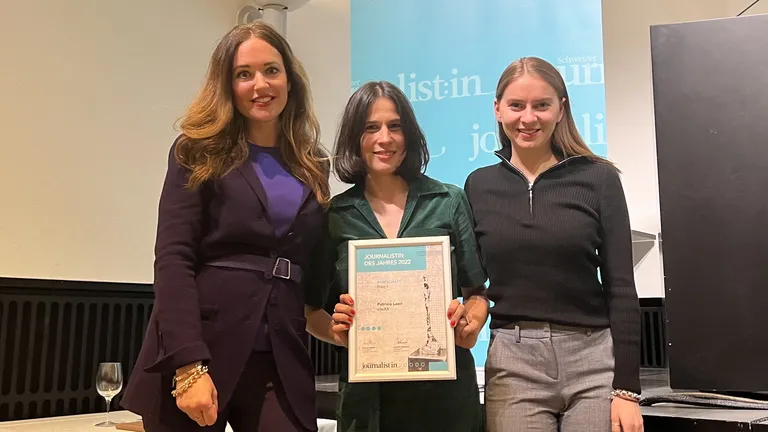
Crowdinvesting
In 2023 we cracked
Finalists
As start-up entrepreneurs at the SEF Award 2024.
App Launch!
Our app will go live in June 2024.
Book written
First place
Winners
We'll get the
People&Planet First
First certified social enterprise in Switzerland.
80'000
Women follow ellexx on all channels.
ellexx invest!
The largest to date